Trying to decide which part of Great Falls fits your vision for a true estate home? You are balancing privacy, acreage, architecture, and outdoor access with commute routes and day‑to‑day convenience. This guide breaks down Great Falls’ luxury pockets by lifestyle so you can compare feel, lot options, and practical tradeoffs. You will also get a focused due‑diligence checklist tailored to large‑lot purchases. Let’s dive in.
Why Great Falls appeals to estate buyers
Great Falls is known for low‑density living, large lots, and custom estates set among mature trees. Many properties offer equestrian facilities or direct proximity to natural amenities like the Potomac River corridor, Great Falls Park, and Riverbend. If you value privacy and outdoor recreation, you will find strong options here.
The market sits among the highest‑price communities in Fairfax County, driven by acreage and custom construction. Estate listings often reach the multi‑million range, and even smaller luxury homes trend above typical suburban prices.
Public transit is limited, so most residents drive. Primary routes include Georgetown Pike, Route 7, and connections to the Capital Beltway for Tysons, D.C., and Dulles. Travel times vary with congestion, so evaluating routes at peak hours is important.
Great Falls enclaves at a glance
Riverfront and Potomac‑corridor estates
- Lot and land: Often 1 or more acres with bluffs, slopes, and tiered lawns toward the river.
- Architecture: Custom Georgian, Colonial, Neo‑Traditional, and striking contemporary glass‑and‑stone oriented to views.
- Lifestyle: Boating and kayaking access, scenic water views, and quick reach to Great Falls Park and Riverbend. Expect added attention to floodplain mapping and shoreline considerations.
Georgetown Pike historic corridor
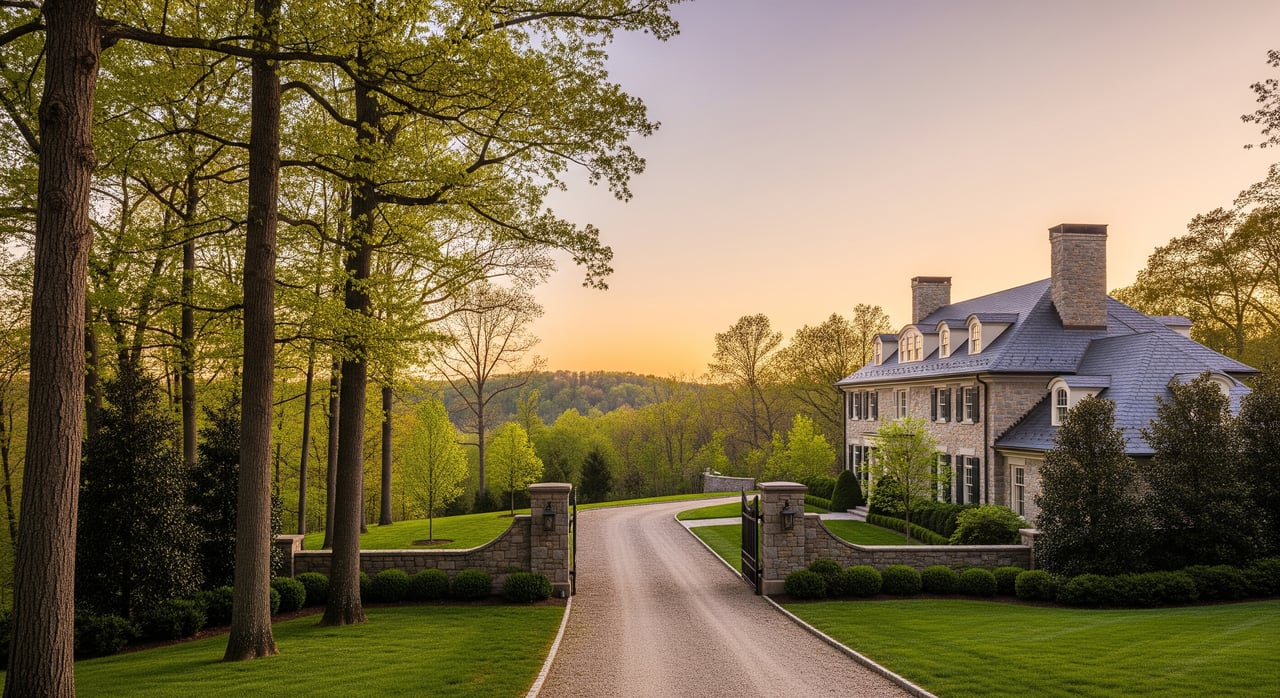
- Lot and land: Roughly 1 to 5 or more acres, long driveways, and mature landscaping that buffers homes from the road.
- Architecture: Traditional Colonial, Federal, Tudor revival, and high‑end renovations with custom interiors.
- Lifestyle: Classic estate feel along a scenic thoroughfare, refined curb appeal, and strong access to parks and amenities without direct waterfront.
Equestrian and hobby‑farm estates
- Lot and land: Commonly 2 to 10 or more acres to accommodate barns, paddocks, arenas, and riding routes.
- Architecture: Functional estate homes with custom barns, guest cottages, and fenced pastures.
- Lifestyle: Designed for horsekeeping and small‑scale agricultural pursuits, with a community of local owners and trainers.
Newer custom gated estates and luxury infill
- Lot and land: Variable lot sizes, sometimes smaller than legacy estates but planned for modern living and outdoor amenities.
- Architecture: Contemporary, transitional, and modern farmhouse with smart systems, pools, terraces, and indoor‑outdoor flow.
- Lifestyle: Turnkey luxury, lower maintenance than older properties, and convenient proximity to village centers or main roads.
Wooded and remote acreage
- Lot and land: Often 3 to 20 or more acres with rolling terrain and heavy tree cover.
- Architecture: Wide range of custom builds sited for maximum privacy and minimal visibility.
- Lifestyle: Maximum seclusion and a natural setting. Some buyers also value potential long‑term options subject to zoning.
How Great Falls compares nearby
McLean and Vienna
- Great Falls offers more acreage, a wooded rural character, and stronger privacy. McLean and Vienna trade larger lots for closer‑in commutes, easier Metro access, and more walkable centers near Tysons.
Arlington and Alexandria
- Great Falls prioritizes land, low density, and nature access. Arlington and Alexandria emphasize transit, higher density, and urban amenities. Your choice depends on how you weigh acreage and privacy versus walkability and transit.
Potomac, Maryland
- Potomac provides comparable waterfront and estate options across the river. Differences often come down to county services, tax structures, schools, and commute patterns. Many buyers compare both sides to see which system and routes fit best.
Commute, airports, and convenience
Great Falls relies on car commutes, with routes that include Georgetown Pike, Route 7, and I‑495. Congestion patterns meaningfully affect travel times to Tysons and downtown. Visiting candidate properties during peak hours is a smart test for your routine.
Dulles International and Reagan National are the primary airports. Your drive time depends on route selection and traffic conditions.
What to verify before you buy
Lot and build constraints
Confirm net buildable area, not just total acreage. Steep slopes, riparian buffers, and woodland can limit siting for additions, pools, and courts. Review setbacks, recorded covenants, and easements, including any neighbor access rights.
Floodplain and river adjacency
Potomac‑adjacent parcels often include FEMA flood zones and riparian buffers. Budget for flood insurance if applicable and obtain elevation data and relevant mapping before you finalize plans.
Zoning and equestrian uses
Fairfax County zoning governs lot size, horsekeeping, accessory structures, and potential subdivision. If you intend to keep horses, add a guest house, or pursue future lot changes, consult county zoning staff and counsel early.
Utilities, wells, and septic
Some pockets have public water and sewer while others rely on well and septic. Verify connections, system capacities, and recent inspection reports. Replacement costs can be significant, so due diligence here is essential.
Access and private road maintenance
Certain estate roads are private with owner or HOA responsibility for upkeep and snow removal. Confirm agreements and shared costs before you close.
Environmental and conservation
Mature trees, stream valleys, and protected habitats may restrict clearing or expansion. Conservation easements or historic protections can limit development rights, so review all recorded documents.
Insurance and operating costs
Factor in specialized coverage, such as flood policies for riverfront homes or liability for equine activities. Annual operating budgets should include landscaping, security, pool upkeep, and road or driveway maintenance.
Schools and community services
Great Falls is served by Fairfax County Public Schools, a highly regarded county system. School assignments vary by parcel, so verify current boundary maps and understand access to emergency services, which can differ in rural pockets.
Which enclave fits your lifestyle?
- You want water views and direct trail access: Consider riverfront and Potomac‑corridor estates, with close proximity to Great Falls Park and Riverbend.
- You prize classic curb appeal and a stately approach: The Georgetown Pike historic corridor offers traditional architecture on large, established parcels.
- You plan to keep horses or run a hobby farm: Equestrian pockets provide barns, paddocks, and arena potential with space for outbuildings.
- You prefer modern design and turnkey living: Newer custom gated or infill estates deliver contemporary floor plans and advanced systems.
- You seek maximum privacy with a natural backdrop: Wooded and remote acreage gives you long driveways, heavy canopy, and minimal visibility.
Estate buyer checklist
- Confirm zoning, covenants, easements, and permitted uses with Fairfax County.
- Order a topographic and site survey that flags buildable areas, easements, and flood designations.
- Schedule septic and well inspections where applicable. Verify public water and sewer connections where present.
- Review property tax history and secure insurance quotes, including flood or equine liability if relevant.
- Visit during peak traffic times to assess real‑world commute patterns and route reliability.
- Discuss subdivision, accessory units, or expansion with planning and zoning counsel.
- Speak with neighbors or the local civic association to understand road maintenance, snow removal, and any customary practices.
When you are ready to compare specific properties and off‑market opportunities, connect with a local advisor who understands these pockets parcel by parcel. For boutique, owner‑led guidance and white‑glove representation, reach out to Ikon Realty. We will help you align the right enclave with your lifestyle and manage the details from survey to settlement.
FAQs
How large a lot do I need in Great Falls?
- For equestrian or hobby farming, many buyers look at 3 or more acres; for privacy and a generous yard, 1 to 3 acres often works, but compare net usable acreage after slopes and buffers.
Are Potomac riverfront properties more expensive to insure and maintain?
- Yes, plan for possible flood insurance, shoreline and erosion considerations, and higher maintenance. Obtain flood‑zone assessments, elevation data, and relevant reports early.
Can I keep horses or add a guest house on a Great Falls estate?
- It depends on Fairfax County zoning and any neighborhood covenants. Confirm allowances before you move forward.
What commute times should I expect from Great Falls to Tysons or D.C.?
- Times vary widely by time of day and route. Test your drive during peak hours to gauge real‑world conditions.
Will rural pockets of Great Falls have reliable utilities and internet?
- Availability varies by parcel. Some areas have public water and sewer, others rely on well and septic; wired high‑speed internet can be limited under heavy canopy. Confirm with providers and request service maps.